
Resource Person:
- Nikhil Jaware (HR)
- Vaibhav Deshmane (Senior Manager)
- Pravin Yadav (Supervisor)
- Shivani Khadse (Supervisor)
Industry Profile:
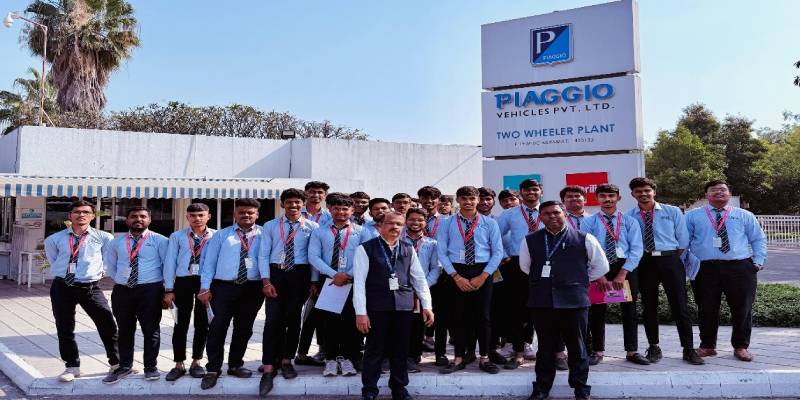
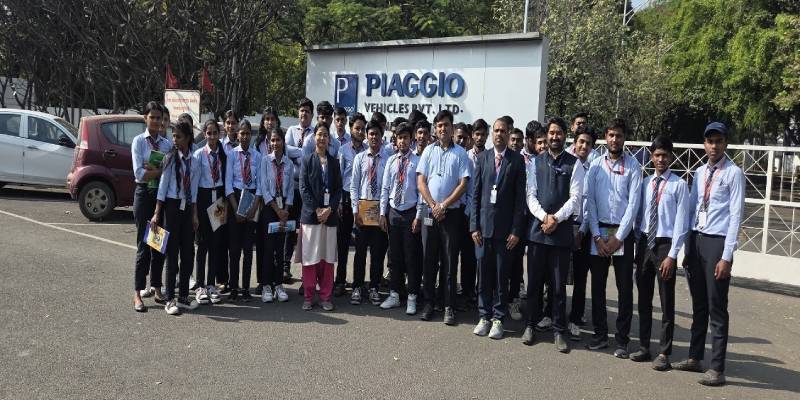
1. Piaggio Vehicles Pvt. Ltd. is one of the leading automobile manufacturers in India and a wholly owned subsidiary of the Piaggio Group, Italy. The company is globally renowned for its innovation, advanced engineering, and quality manufacturing in the field of commercial vehicles and two-wheelers. Piaggio has established a strong presence in the Indian market through its state-of-the-art manufacturing facilities and technologically advanced products.
2. Company Overview
- Company Name: Piaggio Vehicles Private Limited
- Parent Company: Piaggio Group, Italy
- Industry Type: Automobile Manufacturing
- Products: Commercial Vehicles (3-Wheelers, Small Commercial Vehicles) and Two-Wheelers (Scooters & Motorcycles)
- Manufacturing Facilities: Baramati (Maharashtra), Mandya (Karnataka)
- Market Presence: India and International Markets
3. Commercial Vehicle Plant
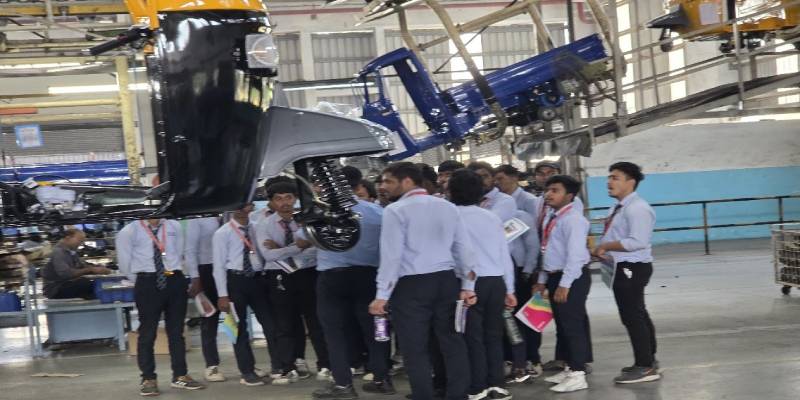
The Piaggio Commercial Vehicle Plant specializes in the manufacturing of three-wheelers and light commercial vehicles used for goods transportation and passenger services. The plant is equipped with modern automated machinery and follows lean manufacturing practices.
Key Activities Observed:
- Chassis fabrication and frame assembly
- Engine assembly and testing
- Transmission and axle fitting
- Painting and surface coating processes
- Final assembly and quality inspection
Key Products:
- Piaggio Ape Series
- Ape Xtra
- Ape City
- Electric and CNG-based commercial vehicles
4. Two-Wheeler Plant
The Two-Wheeler Plant focuses on the production of premium scooters and motorcycles known for their design, performance, and fuel efficiency. The plant adopts advanced robotic systems and strict quality control standards.
Key Activities Observed:
- Body panel manufacturing and assembly
- Engine machining and assembly
- Robotic painting and finishing
- Assembly line operations
- Performance testing and road simulation tests
Key Products:
- Vespa Scooters
- Aprilia Scooters and Motorcycles
5. Manufacturing Process
The manufacturing process at Piaggio involves the following stages:
- Raw material inspection and storage
- Machining and fabrication
- Sub-assembly operations
- Main assembly line
- Painting and finishing
- Quality control and testing
- Packaging and dispatch
The plant strictly follows ISO standards, 5S methodology, and Total Quality Management (TQM) practices to ensure high productivity and product reliability.
Products:
A. Commercial Vehicle Products (Three-Wheelers & EVs)
Piaggio is one of the leading manufacturers of three-wheeler commercial vehicles in India, offering a wide range of products designed for goods and passenger transport, including ICE (Internal Combustion Engine) and Electric variants.
1. Ape Series (Traditional & Passenger/Cargo 3-Wheelers)
a. Piaggio Ape Xtra Range
- Versatile cargo 3-wheeler for goods transportation with options like standard cargo body and delivery van configuration.
- Available in multiple fuel options: diesel, petrol, CNG, LPG (fuel-agnostic).
- Known for strong load-carrying capacity, reliability, best-in-class gradability, and ease of maintenance.
b. Piaggio Ape NXT+
- Modern passenger-oriented 3-wheeler with improved aesthetics, comfort and high fuel efficiency (CNG variant offers up to ~50 km/kg).
- Features include tubeless tyres, updated dashboard and canopy design for better visibility and comfort.
c. Ape City / Ape City+
- Mid-body three-wheeler range with India’s first 230 cc 3-valve technology in alternate fuel variants (CNG, LPG, petrol & diesel).
- Designed for urban mobility with enhanced power and ride quality.
d. Diesel Cargo 3-Wheelers: Ape Xtra 600 & Ape Xtra Bada 700
- Newer diesel cargo three-wheeler models with improved power and payload performance for intra-city and semi-urban use.
2. Electric Three-Wheeler Range (Ape Electrik & FX Series)
Piaggio has also entered the electric mobility segment with a range of battery-powered three-wheelers for both passenger and cargo applications.
a. Apé Electrik AP Range
- Electric three-wheelers designed for urban last-mile mobility with features like automatic transmission, regenerative braking, and digital display.
- Includes Ape E-City — passenger EV with swappable or fixed battery options.
b. Ape E-Xtra FX / FX Max
- Electric cargo 3-wheelers with fixed battery technology and larger cargo decks (~6 ft).
- Designed for last-mile delivery, e-commerce logistics, FMCG transport, etc., with features like hill-hold assist and boost mode.
- Newer FX Max variants offer enhanced driving range and improved ground clearance.
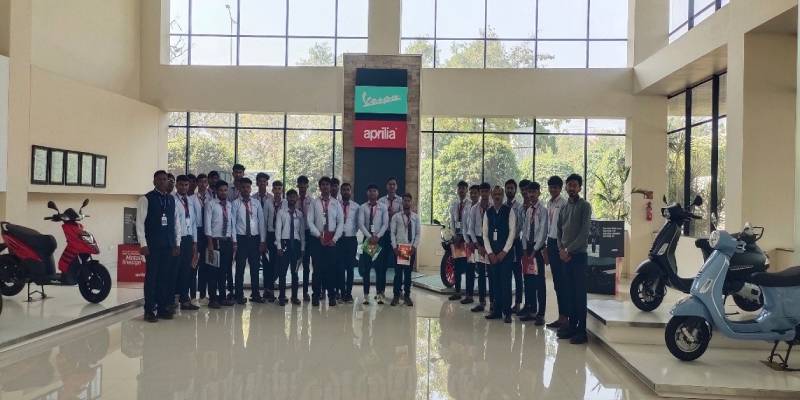
B. Two-Wheeler Products (Vespa & Aprilia Scooters)
In addition to commercial vehicles, Piaggio Group (the parent of Piaggio Vehicles) markets premium two-wheelers in India under the Vespa and Aprilia brands. These are manufactured/assembled in India and distributed through Piaggio’s dealer network.
1. Vespa Scooters
Vespa is one of the most iconic scooter brands globally, known for classic Italian design, premium build quality, and urban mobility.
Popular Vespa models available in India include:
- Vespa ZX (125cc) – entry-level scooter with stylish design.
- Vespa 125 – automatic scooter with smooth performance and good mileage.
- Vespa 150 & Vespa S 150 – larger-engine models with higher power and refined ride quality.
2. Aprilia Scooters
Aprilia products cater to the performance-oriented scooter segment with sporty styling and dynamic ride characteristics.
- Aprilia SR 125, SR 160, SR 175 – sporty scooters with engaging performance.
- Aprilia SXR 125 & SXR 160 – maxi-scooters with enhanced comfort and storage for urban and touring use.
- Aprilia Storm 125 – performance-style scooter with appealing ride quality.
Objective/Purpose:
- To study the organizational structure and functioning of PIAGGIO Commercial Vehicle and Two-Wheeler manufacturing plants.
- To understand the manufacturing processes involved in three-wheelers and two-wheelers.
- To observe modern automobile assembly line operations and material handling systems.
- To gain knowledge of engine assembly, chassis assembly, and vehicle integration processes.
- To study quality control techniques and inspection methods followed in automobile industries.
- To understand safety practices, industrial discipline, and workplace ergonomics.
- To learn about the application of automation, robotics, and advanced manufacturing technologies.
- To understand different fuel technologies including diesel, petrol, CNG, LPG, and electric vehicles.
- To observe environmental management and sustainability practices followed by the industry.
- To correlate theoretical knowledge gained in classroom with real industrial practices.